Homeowners see their renovation as it happens.
The Client Portal is where Chapter's homeowners followed their renovation. Progress, approvals, payments and documents in one place, built on the same data as the HUB.
- Role
- Senior Product Designer
- Company
- Chapter
- Timeline
- 2022–2025
- Platform
- Desktop and mobile
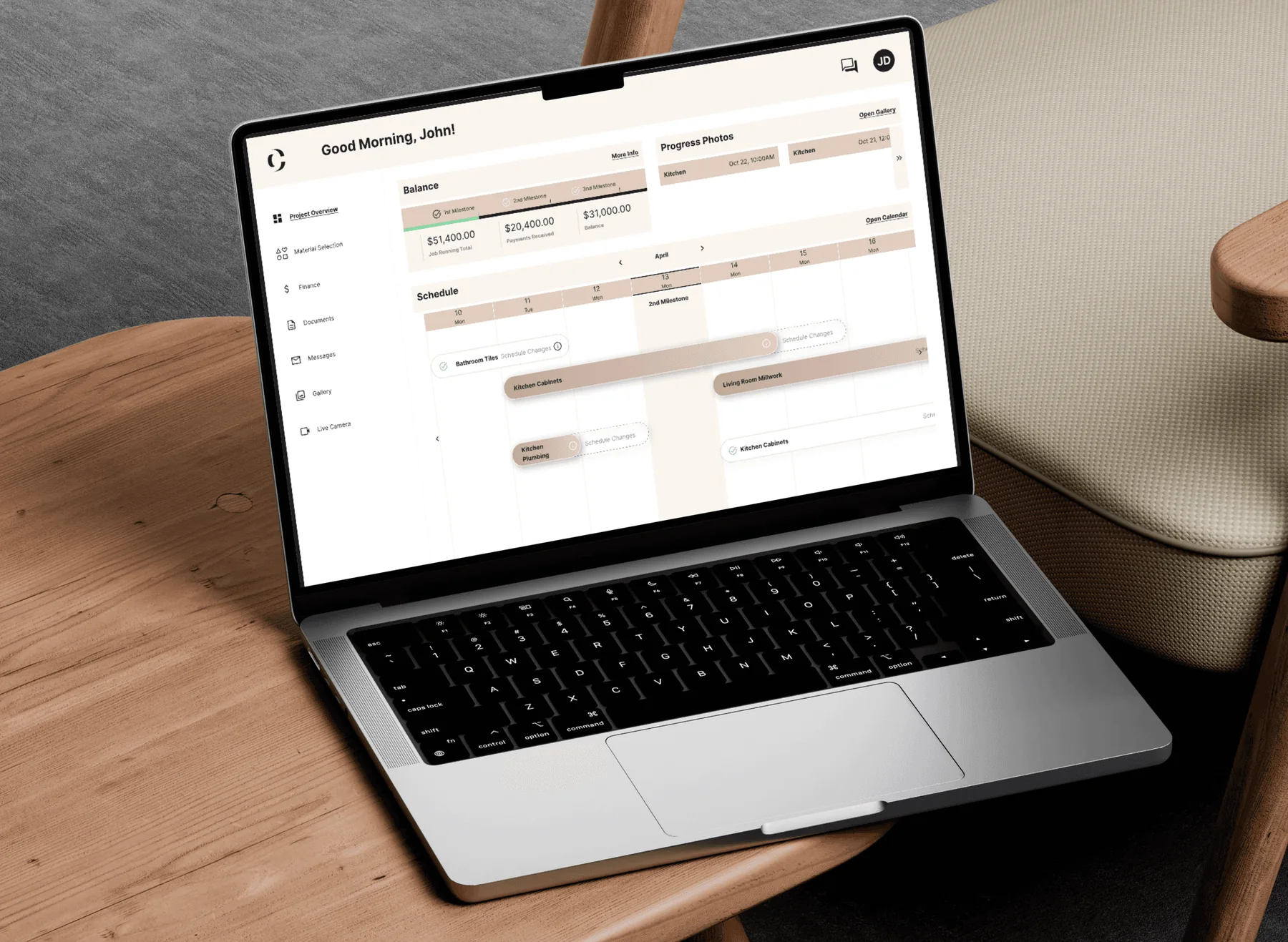
Homeowners could not see daily progress. Updates were spread across email, texts and calls, and every approval took several rounds.
Researched what worried clients most, then designed one portal for progress, approvals, payments and documents, fed by the HUB.
200+ homeowners used it. Project managers spent less time on status updates, and the portal became a selling point for Chapter.
Homeowners could not see their own project.
Is it on schedule? Where is my money going? Did the PM get my message? Clients kept asking the same questions.
Scattered communication
Emails, texts and calls. Hard to track and easy to lose.
No visibility
Clients had no view of what happened at their home each day.
Slow approvals
Every decision needed back-and-forth with the team.
Designed for people who are not renovation experts.
I researched what caused clients the most anxiety. Four things kept coming up. Each one got a clear answer in the portal.
- CostsBalance by milestone, invoices and online payments
- ProgressSchedule, daily photos and live cameras
- ApprovalsProposal, change orders and design choices approved online
- CommunicationMessages with the team, kept with the project
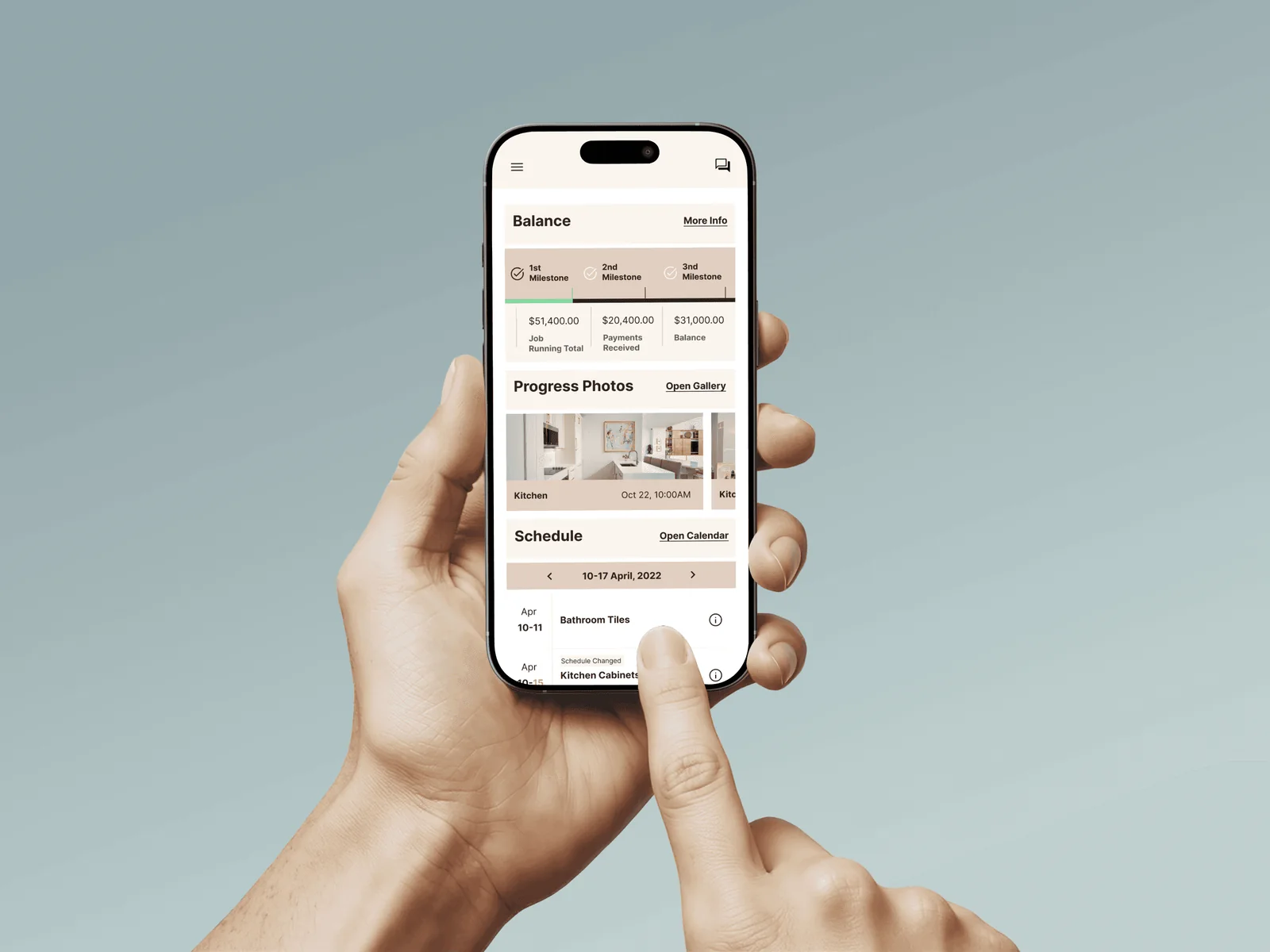
Progress, payments and documents in one place.
Clients log in any time to follow the work, pay, open documents and message their team.
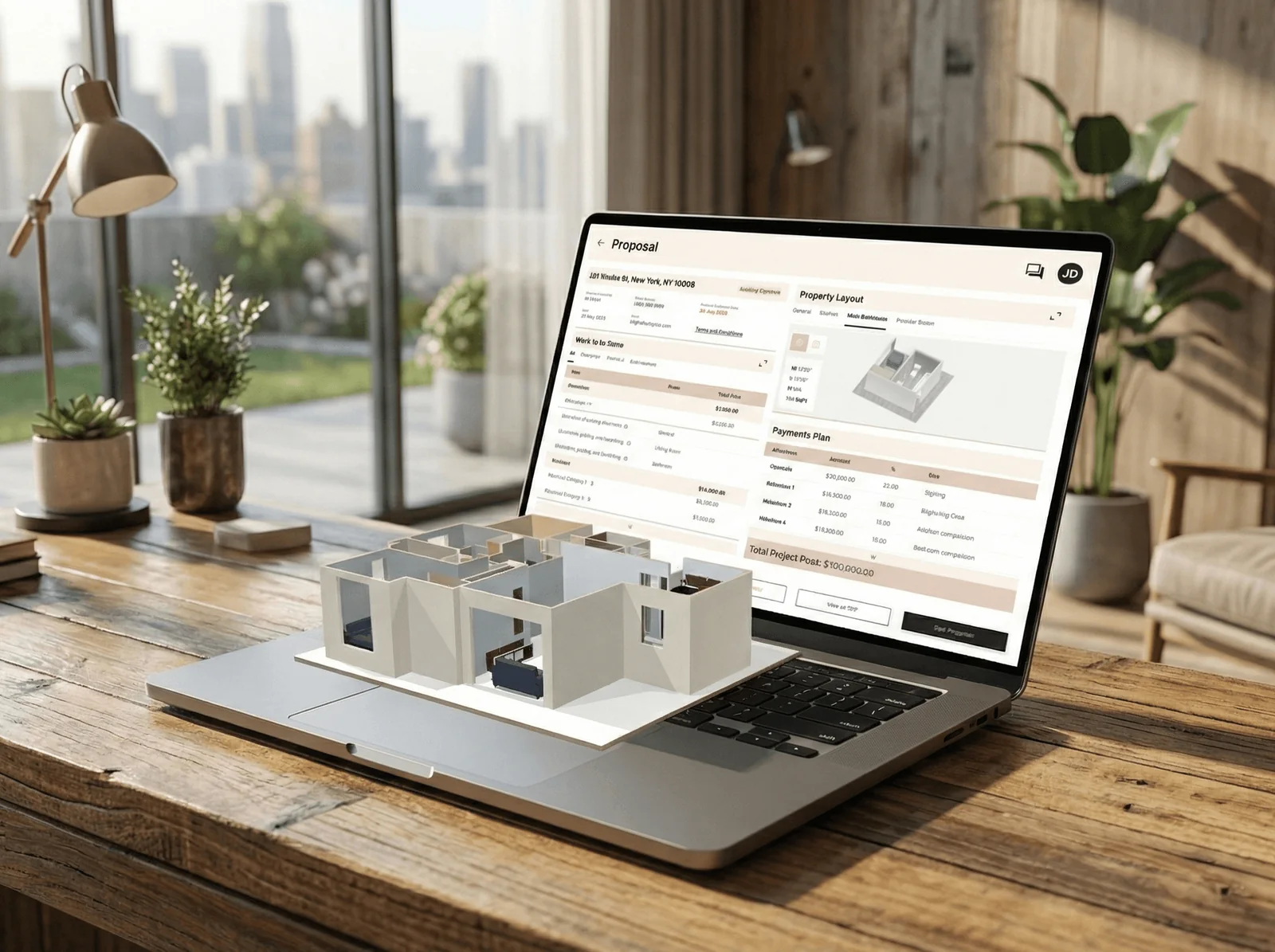
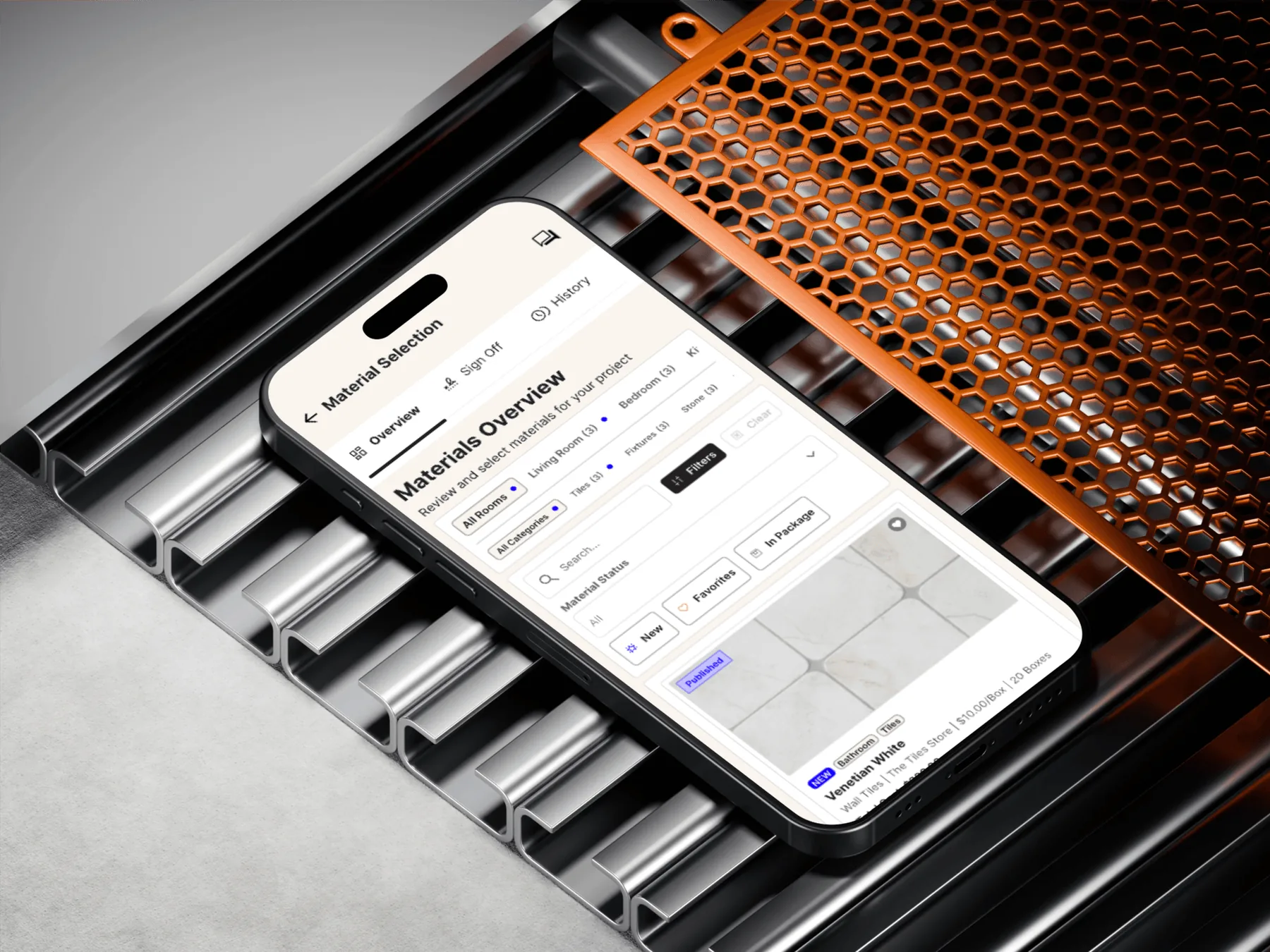
Every approval shows its status and its history.
These were high-value decisions. The client and the team both needed to see what was approved, when, and which version.
-
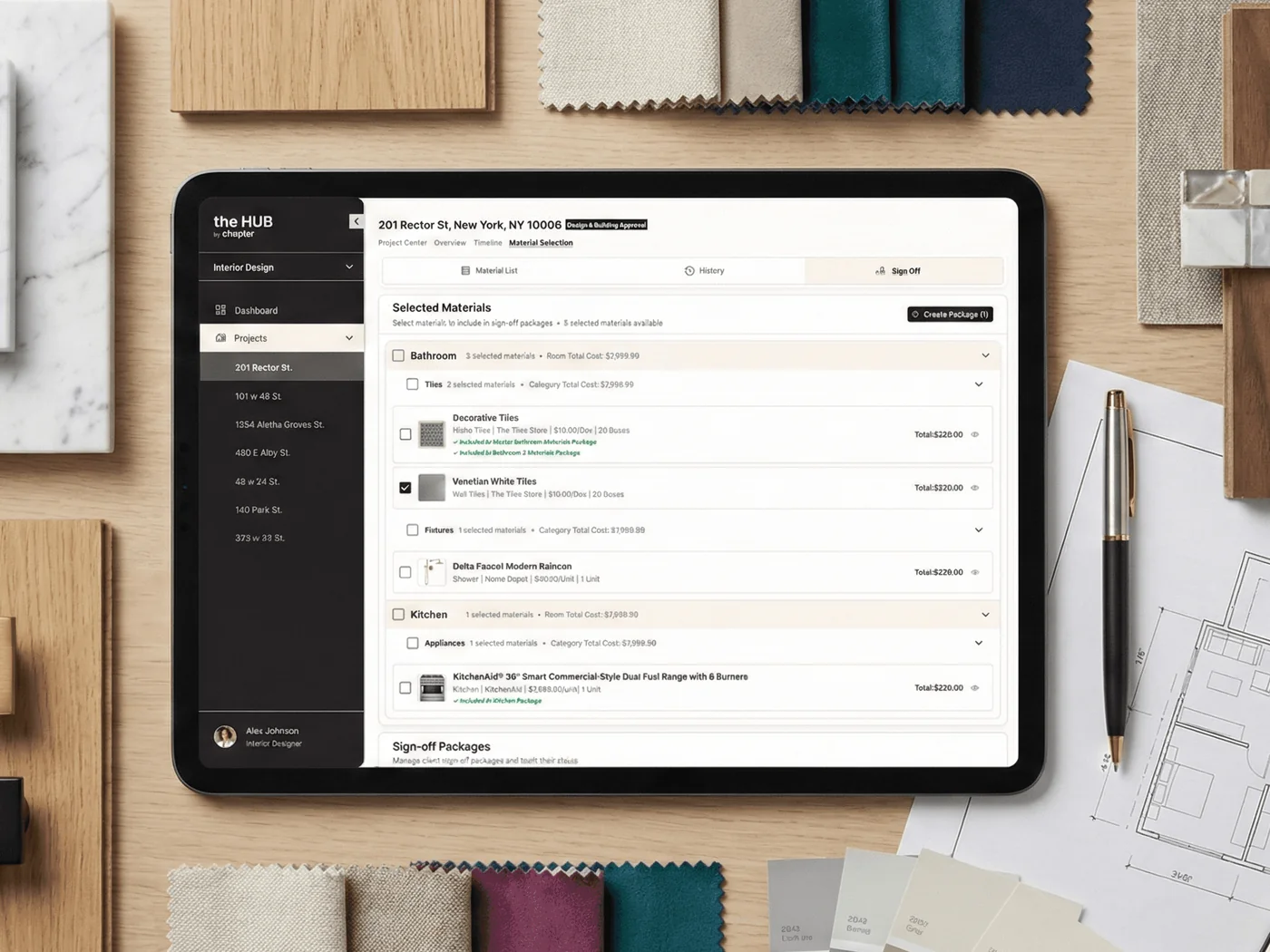 1In the HUB
The designer sends a package
Selected materials are grouped by room and sent to the client as a sign-off package.
-
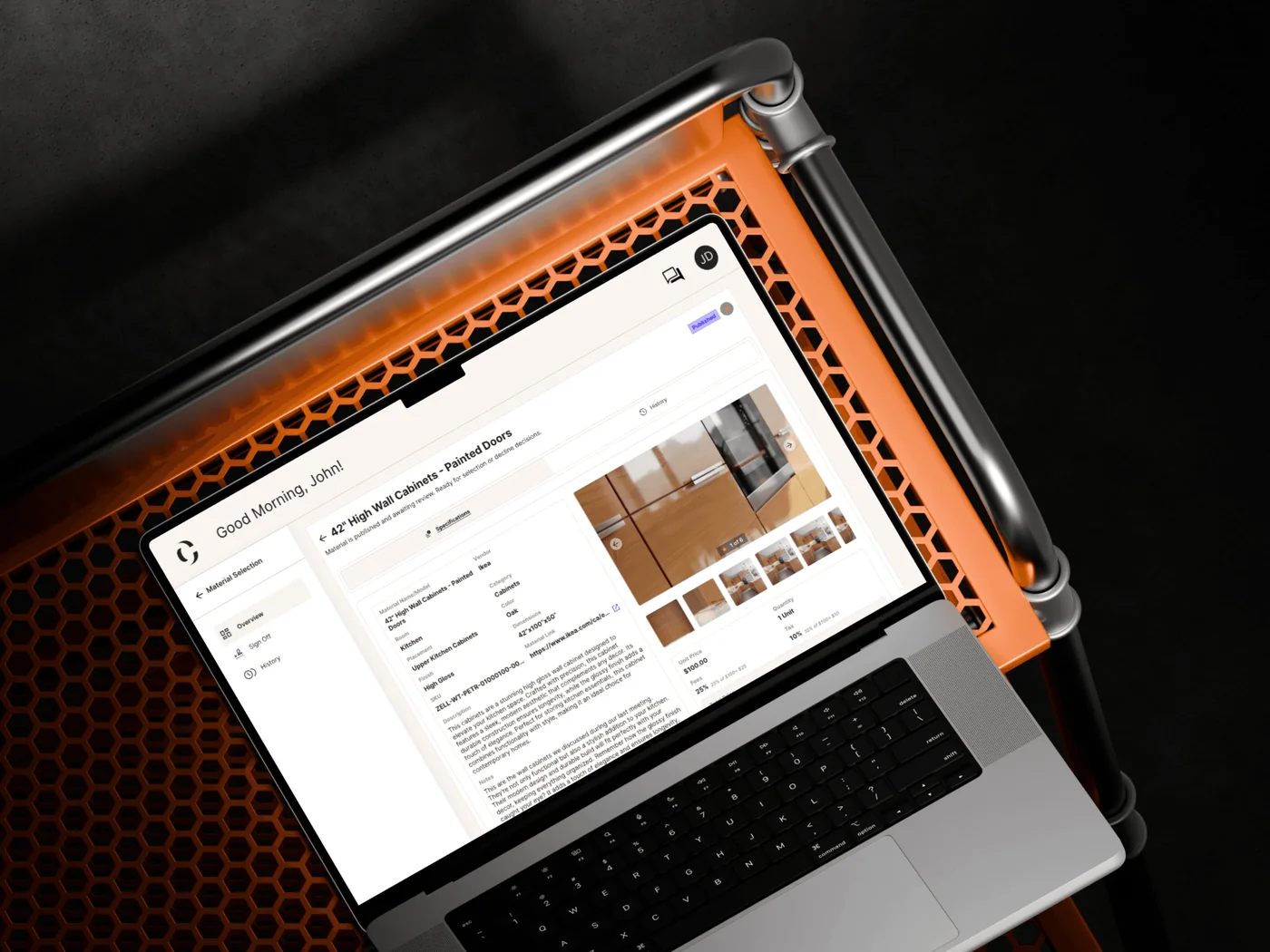 2In the portal
The client reviews each item
Specs, price and photos, a visible status, and a history of every change.
-
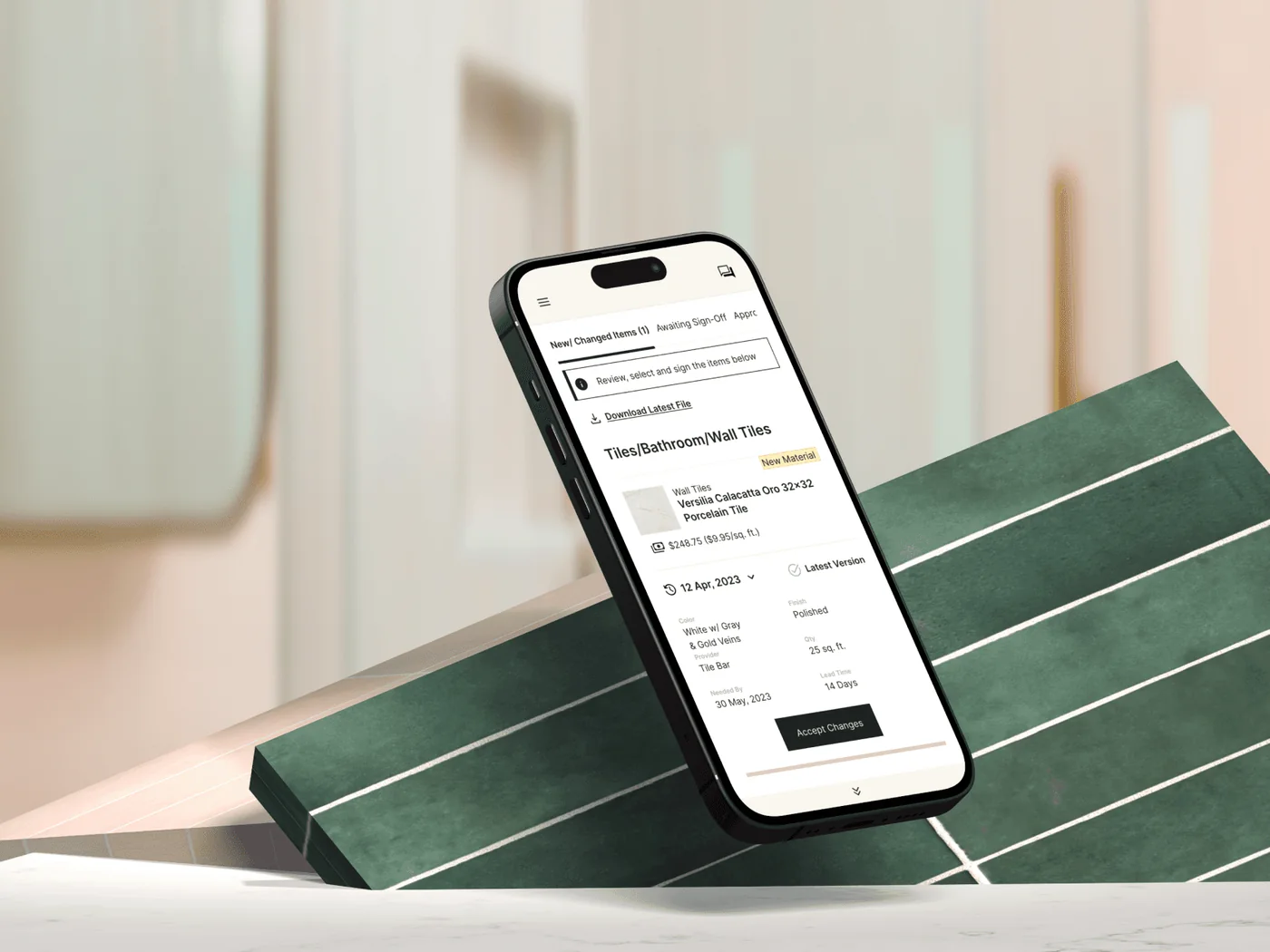 3On the phone
Changes are easy to confirm
New items and changes are marked. The client accepts the latest version from the phone.
What changed for clients and the team.
The portal ran for three years and kept improving from homeowner feedback.
200+ homeowners
Used the portal to follow their renovation.
Less status chasing
Project managers spent less time answering client questions and more time on the project.
A selling point
The portal became part of how Chapter sold its projects to new clients.
What I learned.
- 01
Make complex processes feel simple.
Material selection, proposal review and payments can become calm, clear steps for the client.
- 02
Give freedom, keep guardrails.
Clients need room to explore options. The business needs limits that protect margins and timelines.
- 03
Design for long projects.
A renovation runs for months. People leave and come back, so the screen has to show where things stand right away.
Let's talk.
I'm looking for a senior product design role on a team that builds complex products. B2B platforms, operations tools and client experiences.